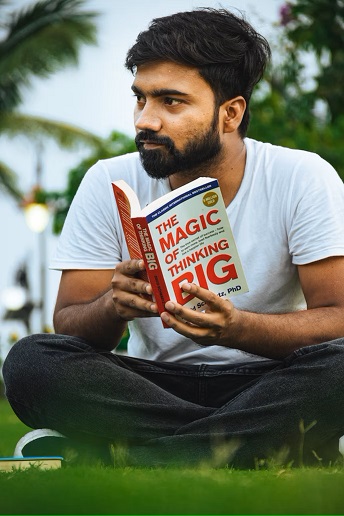
The Magic of Thinking Big BOOK SUMMARY
The Magic of Thinking Big summary was written by Paul Minors, an author, consultant, and podcaster. Paul teaches people about productivity, business, and self-improvement. Learn more about Paul on the Paul Minors Website.
INTRODUCTION
Who is this summary for?
The Magic of Thinking Big is a great book for just about anyone. It contains the secrets to getting the most out of your job, your marriage, and your family life. The book illustrates how you don’t need to be incredibly intelligent or unique to have the success you want, you simply need to think in a way that cultivates success. By thinking big you can motivate yourself to improve your work life, earn more money and get more happiness and fulfillment out of life.
About the author
David Schwartz wrote The Magic of Thinking Big in 1959, it quickly became a New York Times bestseller and has a great reputation as one of the best self-help books.
The Magic of Thinking Big currently holds an Amazon 4.7 out of 5-star review score and has accumulated 15,787 ratings.
Schwartz was a professor of Marketing at Georgia University but is more well-known for his work as a motivational speaker and writer. Passionate about helping others Schwartz became a self-help coach and began his consulting firm dedicated to leadership development. Schwartz sadly passed in 1987 at the age of 60.
In this summary
Schwartz’s book aims to provide the secrets to getting more out of every aspect of your life, so there are a few topics to cover in this summary. We’ll start by discussing believing in yourself, excuses, and confidence before we move on to ‘how to think big’. Next, we’ll cover dreams, your environment, your attitudes, and making things happen. Finally, we’ll discuss defeats, failures, and goals.
BELIEVING IN YOURSELF
We’ve all been told before that we just need to believe in ourselves. It sounds easier said than done, but Schwartz emphasizes the importance of believing that you can succeed and that you will. Schwartz offers three top tips for improving the belief you have in yourself.
Think success, not failure. And this goes for all areas of your life, not just work. When you are facing a tricky situation, don’t think about a potential loss. Think about what’s going to happen when you succeed. By thinking about success, you are predisposed to putting into action whatever needs to be done to succeed. But thinking about failure only sets you up to fail.
Remember, you’re better than you think. It’s all too easy to undermine ourselves, to think we are not good enough. But the truth is, we are better than we give ourselves credit for, and we should remind ourselves of this often. Schwartz emphasizes that success isn’t magic, nor does it require you to be super-intelligent. Everyone is capable of success, so don’t underestimate yourself.
Believe big and you’ll succeed big. Schwartz explains that your beliefs can either limit you or extend your success. So have big beliefs and you’ll have big successes.
EXCUSES
Schwartz describes having excuses as ‘excusitis’, or the failure disease. He explains that people cut themselves short and rely on excuses to avoid doing things. Schwartz believes that excuses are most common when it comes to health, intelligence, age, and luck. We’ll cover a few of Schwartz’s tips when it comes to combatting excuses below.
Excuses about health
Firstly, don’t talk about it, the more credit you give to your supposed bad health, the worse it appears to be. Don’t give your ailments any more attention than necessary. Don’t worry about your health either, especially before anything has happened. There’s no point stressing about something that’s not even real yet. Recognize what good health you have and celebrate that. Consider someone who has asthma, rather than complaining about the asthma and letting it hold you back, be grateful that your legs work and you can move around freely. Just change your perspective.
”Remind yourself often, “It’s better to wear out than rust out.” Life is yours to enjoy. Don’t waste it. Don’t pass up living by thinking yourself into a hospital bed.”
Excuses about a lack of intelligence
It’s all too common to hear people explaining that they are simply not smart enough or as smart as someone else. Schwartz believes that you are almost always underestimating your intelligence, and likely overestimating other people’s intelligence. Focus on what you are good at, and what you do know a lot about, and consider those your assets. Schwartz also reminds us that there’s something more important than intelligence and that’s attitude. If you have a positive, winning attitude, you’ll find it more useful than having brains. Memorizing is a useless skill in most situations, anyone who knows some interesting facts isn’t necessarily more intelligent than you are. Embrace the ability to think, and use that skill to develop your ideas, not simply regurgitate other people’s information.
Excuses about age
The phrase ‘you can’t teach an old dog new tricks’ is much more damaging than it is true. It gives people the idea that age puts a restraint on what you are capable of. Schwartz encourages everyone to view their current age in a positive light. When you look forward, consider how much time you have left, don’t dwell on how much time has passed. Schwartz explains that someone who is 50 years old, still has 40% of their life left to live, that’s plenty!
”Invest future time in doing what you want to do. It’s too late only when you let your mind go negative and think it’s too late. Stop thinking “I should have started years ago.” That’s failure thinking. Instead think, “I’m going to start now, my best years are ahead of me.” That’s the way successful people think.”
Excuses about luck
People assume that they are predisposed to being unlucky. But Schwartz reminds us that luck isn’t what creates the success of good fortune. Instead, these things are a result of preparation, planning, positive thinking, and action. The founder of a successful company didn’t get ‘lucky’, they worked hard for years and years, and they earned the success. Schwartz explains that success is a result of mastering success-producing principles. You do not get promoted because you are lucky, you get promoted because you’ve worked hard and proven yourself. Schwartz encourages you to focus on developing the skills and qualities required for success rather than focusing on luck or bad luck.
CONFIDENCE AND FEAR
One critical way you can improve your life is by building confidence and destroying your fears. Fears hold you back whereas confidence propels you forward.
One way to can destroy your fears is by taking action. When you have a fear about a certain situation, and you sit back and do nothing, the fear festers and develops. But when you take constructive action and try to do something about the fear, your confidence strengthens and success is more likely.
Schwartz emphasizes the importance of positive thinking. Letting negative, self-destroying thoughts into your brain is only going to fuel the fear fire. Instead, focus on positivity, and your confidence will grow.
Rid yourself of guilt by listening to your conscious. Schwartz explains that guilt is toxic and can have a significant effect on your confidence.
Make eye contact with people, don’t look away. Sit in the front row. Speak up in meetings. And smile at people. These may seem like little things, but they add up, and work towards building your confidence.
HOW TO THINK BIG
Thinking big is the main premise of The Magic of Thinking Big. But how exactly do you think big? The first thing you need to do is stop selling yourself short. Remember that you are better than you think. Stop with self-doubt. Schwartz emphasizes the importance of using a positive vocabulary. Words that are positive and promising. Avoid toxic words that imply failure and negativity (like impossible, can’t, won’t). Thinking big requires the ability to stretch your vision. As Schwartz explains, you should concentrate on what can be, not just what is. Another important aspect of thinking big is avoiding trivial things, don’t get caught up in minor issues, focus on what’s important, the bigger picture.
CREATIVE THINKING AND DREAMING
Thinking and dreaming creatively are a big part of thinking big and are going to significantly improve your life. There are many ways to think and dream creatively, and it’s important to embrace your options. Schwartz encourages everyone to stop getting caught up in tradition, just because something is usually done one way doesn’t mean it’s the only way. Remain open-minded and look for new approaches and new ideas. Don’t be afraid to be experimental, you’ll be surprised at what you might learn.
Schwartz believes that you should ask yourself a few questions every day. The first question is; “how can I do better?” By continuously asking yourself this you are always looking for improvement. Even if the improvements seem minuscule they will add up over time. Reflect on what you are currently doing and identify how you can improve. The second question you should ask is; “how can I do more?”. Again, by reflecting on what you currently do, you’re opening your mind up to look for opportunities to do more. There’s usually something else you can add.
”Stretch your mind. Get stimulated. Associate with people who can help you think of new ideas, new ways of doing things. Mix with people of different occupational and social interests.”
YOUR ENVIRONMENT IS IMPORTANT
Schwartz explains that you need to be conscious of your environment. Some environments are going to encourage you and lift you up, while others are likely to hold you back. This is particularly relevant when you consider the people you surround yourself with. Negative people, who think small, and are constantly saying ‘You can’t do it’ are the people you need to avoid. These people will hold you back and encourage defeatist thinking. Instead, surround yourself with successful people, successful people. And ask them for advice.
”Get plenty of psychological sunshine. Circulate in new groups. Discover new and stimulating things to do. Go first class in everything you do. You can’t afford to go any other way.”
ATTITUDE
It’s important to always have a good attitude, this is not only for your self-perception but also for how others see you. People respond well to other people with good attitudes, display yours through your smile, handshake, voice, words, and your walk. Walking with your head held high and a smile on your face may sound silly but it does wonders for your positive attitude. When talking to people, broadcast the good news, not the bad. Schwartz also believes that it’s important to make other people feel as if they are important. Show them appreciation and make them feel respected. In doing this, people are much more likely to help you out and do things for you.
”Grow the “Service first” attitude, and watch money take care of itself. Make it a rule in everything you do: give people more than they expect to get.”
DEALING WITH OTHER PEOPLE
The Magic of Thinking Big emphasizes the importance of being likable. It’s critical in the process of improving your life and thinking big. Consider what you like in a person and ensure that you are being that person. Build friendships and relationships wherever you can. And when meeting new people, ensure that you learn their names. Something we all need to remember is that everyone is different and nobody is perfect. You can’t expect everyone to think or act just like you, it doesn’t mean that they are less of a person, just different.
It’s extremely important to let other people have their say when you are holding a conversation. Ensure that they get to share their point of view and opinions. Ask questions and encourage them to share as much as possible. In doing this, they will be much more receptive to you. Schwartz also recommends you practice looking for positive qualities in everyone you meet and don’t get caught up in their downfalls. As it’s been made pretty clear so far by Schwartz, positive thinking is key in every aspect of life.
ACTION IS EVERYTHING
”Be an activationist. Be someone who does things – a doer, not a don’t-er.”
Schwartz explains that too many people wait until the ‘perfect time’. The reality is, there never is a perfect time, things always come up. You’ve got to stop waiting for the perfect conditions and just get started!
Schwartz also wants us to remember that ideas are only ideas. They have no value until you activate them. You can be full of ‘million-dollar ideas’ but unless you act upon these ideas, you’ll never realize any success. Another tool to being a ‘doer’ is that you should use an action to eliminate your fears. By doing the exact things that you fear, your fear will disappear and your confidence will grow.
To be someone who takes action, you have to shift your mindset and adjust your thinking. Always be thinking of the right now. Stop using words like tomorrow, next week, later, or the infamous ‘I’ll start on Monday’. Instead, become someone who starts right now.
WHAT ABOUT DEFEAT?
The reality is that success is not always the only result of any new venture. Failure happens and it’s normal. Schwartz explains that it’s your attitude towards failure that is important. He explains that any setback should be studied, what can you learn from a loss and how can you use this information to ensure you have a win next time? It’s also important to be able to reflect on your work, be critical in a constructive way, identify your weaknesses, and work on turning these into strengths. Schwartz emphasizes that there is good in every situation, always looking for the silver lining.
GOALS AND GROWTH
The Magic of Thinking Big emphasizes the importance of having goals.
Goals help you visualize where you are headed and where you want to be one, five, or even ten years from now. Schwartz encourages you to have a ten-year plan. He believes that planning is essential, don’t leave it up to chance. Write down what you want to achieve over the next ten years in all areas of your life; work, home, social, etc.
Have one significant goal and let that be your driving force, let it consume you and make it your focal point. By doing this you will enable yourself to make the right moves to reach these goals. Schwartz also recommends breaking goals down into steps, this way you can tick them off one at a time, making constant progress toward your larger goal.
Don’t be afraid if your goal has a bit of a detour, it doesn’t mean you have given up, just changed the path.
”Surrender yourself to your desires. Set goals to get more energy. Set goals to get things done. Set goals and discover the real enjoyment of living. Invest in yourself. Purchase those things that build mental power and efficiency. Invest in education. Invest in idea starters.”
HOW TO USE THE MAGIC OF THINKING BIG IN LIFE’S MOST CRUCIAL SITUATIONS
”There is magic in thinking big. But it is so easy to forget. When you hit some rough spots, there is a danger that your thinking will shrink in size. And when it does, you lose.”
The Magic of Thinking Big offers some guidelines for how to stay on track and how to avoid being forced to think small. Think big, even when the little people try to hold you back. Schwartz acknowledges that there are going to be people out there who aren’t on your side, who want to see you fail. But if you can remember a few critical points, then these people won’t be able to affect you:
- Refuse to fire the little people. In fighting them, you only reduce your size. Remain big and refuse to fight.
- If you are growing, you need to expect to be attacked. Expect it and be ready.
- Remember that anyone who attacks you or doesn’t wish you well is not a good person. You can feel sorry for them.
- Schwartz also acknowledges that occasionally, we feel as if we haven’t got what it takes. Here’s how he recommends you deal with that feeling:
- Remember the power of your mind, if you think you are weak, then you are. So think that you are strong, and you will be.
- Help yourself by looking important, this will help you feel important.
- Acknowledge your assets and develop these.
Remember that everyone else is also just another human being, they are no more significant than you. Don’t be afraid of anyone else.
CONCLUSION
Key takeaways
- Believing that you can succeed and that you will.
- Think about success, don’t think about failure.
- Remember that you are better than you think you are, don’t undermine yourself.
- When it comes to health, age, intelligence, and luck, don’t makeup excuses. Excuses hold you back and usually aren’t true.
- Fears hold you back whereas confidence propels you forward.
- Take action against your fears, when you fear a situation, just face it and do it. Your fears will quickly be eliminated and you’ll receive a huge confidence boost.
- Use a positive vocabulary. Words that are positive and promising. Avoid toxic words that imply failure and negativity.
- Stop getting caught up in tradition, just because something is usually done one way doesn’t mean it’s the only way. Remain open-minded and look for new approaches and new ideas.
- Be conscious of your environment. Some environments are going to encourage you and lift you up, while others are likely to hold you back.
- Be likable. Consider what you like in a person and ensure that you are being that person.
- There never is a perfect time, things always come up. You’ve got to stop waiting for the perfect conditions and just get started!
- You have to take action and be a doer. Ideas are only ideas. They have no value until you put them into action.
- Any setback should be studied, what can you learn from a loss and how can you use this information to ensure you have a win next time?
- Having goals is important. Goals help you visualize where you are headed and where you want to be one, five, or even ten years from now.
Further reading
- The 4-Hour Work Week by Tim Ferris is the book I probably recommend the most to people, and it’s one I’ve personally read multiple times. This book is an absolute go-to for anyone interested in working for themselves and creating a sustainable work/ life balance. The 4-Hour Work Week is about escaping the 9-5 trap, giving yourself the freedom to work anywhere and still be successful. Similar to The Magic of Thinking Big, this book is all about getting the most out of your life.
- Crush It by Gary Vaynerchuk is a great read for anyone that has a passion and wants to make their passion their job. Vaynerchuck talks about making your dreams a reality, that it’s possible to wake up every day and work on something you love. This book is ideal for anyone wanting to take full advantage of the internet as a platform for building a business and pursuing their passions.
- A Guide to the Good Life by William Irvine is an eye-opening read about how to live a happier and more meaningful life. The book challenges you to think about living life as an art. The art of living is a skill to be practiced (rather than “misliving” and failing to acquire the happiness you want). William Irvine has curated the perfect guide to the good life that is well worth a read!
- Guidelines by Paul Minors summarises the main lessons from 33 of the best-selling self-help books in one place. It is the ultimate book summary; Available as an 80-page E-book and 115-minute audiobook. Guidelines lists 31 rules (or guidelines) that you should follow to improve your productivity, become a better leader, do better in business, improve your health, succeed in life, and become a happier person.
Action steps
- Do you have a ten-year plan? If not, picture where you want to be in ten years, what do you want your life to look like?
- Consider this your major goal. How can you break this down into smaller steps so you can work towards reaching your goal?
- Consider the people you surround yourself with and the words you use regularly. Are the people positive and supportive? Is your vocabulary uplifting? If the answer to these questions is no, start working on meeting the right people and using the right words.
- Stop using excuses, you are only holding yourself back. Try and always look for the positive.
Download the complete book on Amazon
This summary is not intended as a replacement for the original book, The Magic of Thinking Big. All quotes are credited to the above-mentioned author and publisher.
Get The Magic of Thinking Big from Amazon now.


